
NYJN responds to emergent needs for quick analysis, compendiums, and toolkits for advocates as topics and needs arise.

National Opioid Settlements: What It Is and Why Does It Matter?
From 2000 to 2021, the number of overdose deaths from any kind of drug in the U.S. increased dramatically from 17,500 to over 106,000 people. This has resulted in what may consider an opioid epidemic and criss. This crisis has heavily impacted youth as well as adults.
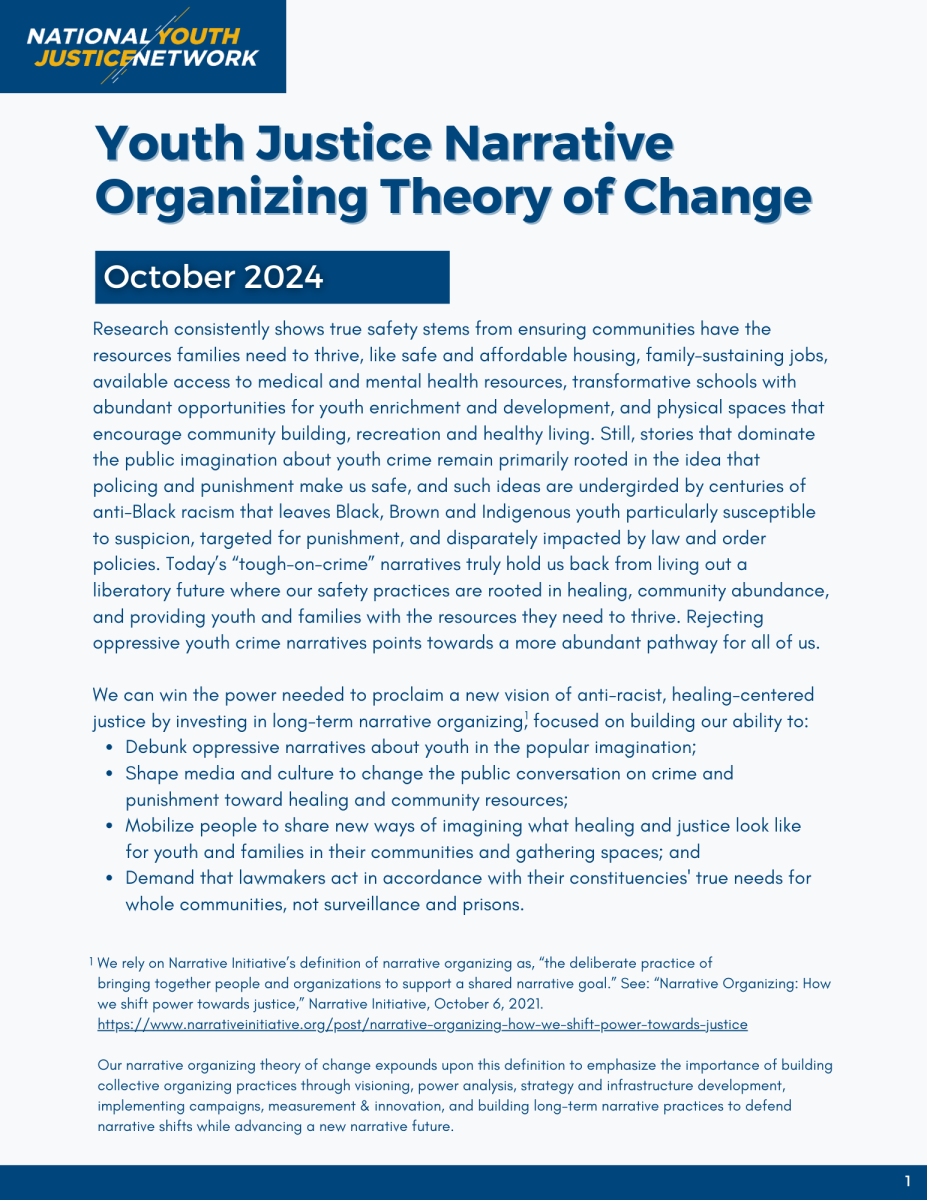
Youth Justice Narrative Organizing Theory of Change – A Call for Funders
In our Youth Justice Narrative Organizing Theory of Change, we outline a organizing and strategy framework for building the necessary infrastructure to build narrative power over the long term. We call on funders to dream big and join us in the long-term organizing effort to shift and heal the deep-seated harms of narrative oppression and unlock collective imaginations for a just and liberatory future for us all.
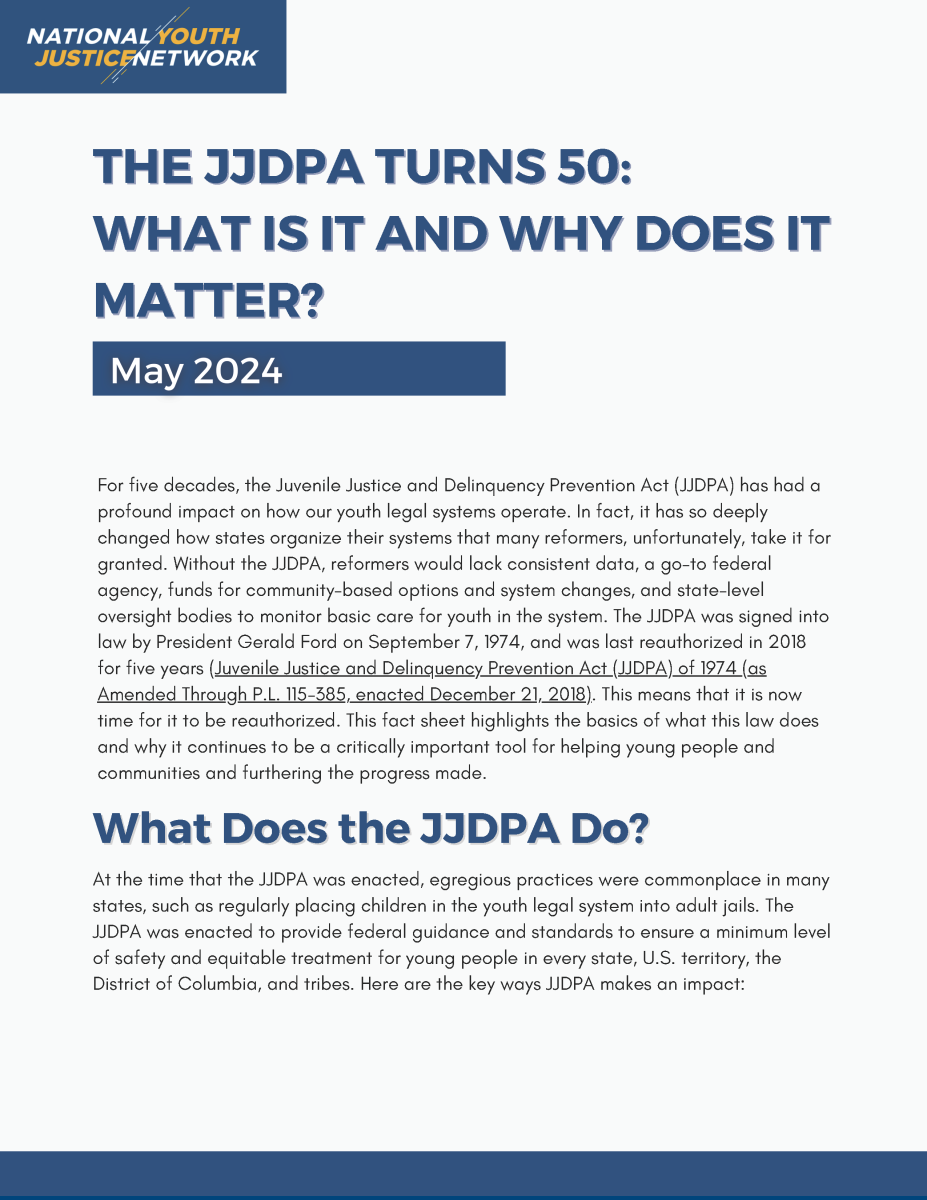
The JJDPA Turns 50: What Is it and Why Does it Matter?
For five decades, the Juvenile Justice and Delinquency Prevention Act (JJDPA) has had a profound impact on how our youth legal systems operate. This fact sheet highlights the basics of what this law does and why it continues to be a critically important tool for helping young people and communities and furthering the progress made.
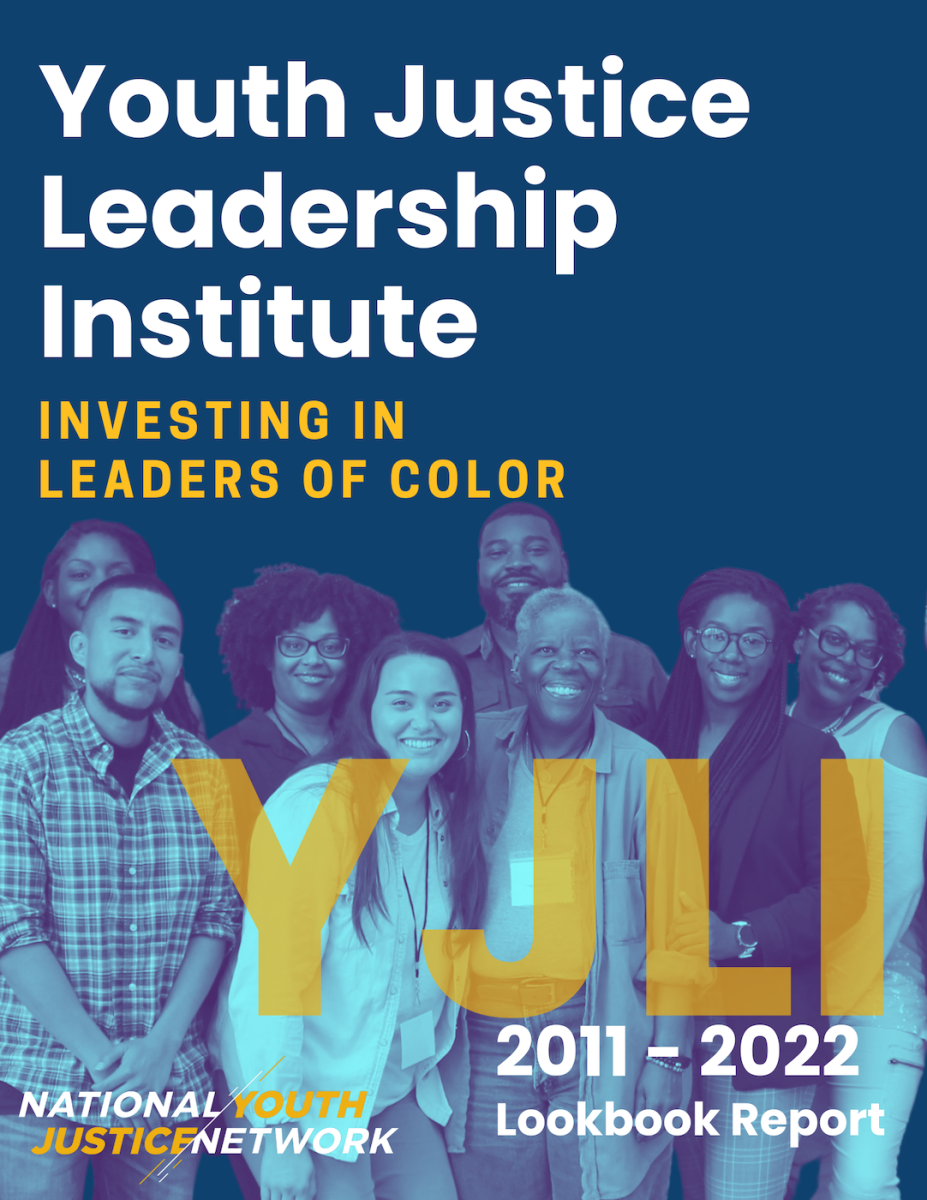
Youth Justice Leadership Institute: Investing in Leaders of Color, Alumni Lookbook
NYJN established the Youth Justice Leadership Institute (YJLI) in 2011 to deepen and strengthen the leadership of Black, Indigenous and other People of Color (BIPOC) advocates working to create true youth justice. Download our YJLI alumni lookbook and join us in celebrating over a decade of transformative leadership development.

YJAM Toolkit: How to Create a Youth-Centered Policy Roundtable, August 2023
Get a step-by-step guide on how to convene conversations and roundtables between youth advocates and state and local policymakers.

Charting U.S. Minimum Ages of Jurisdiction, Detention, and Commitment,
July 2023
The United States is an outlier throughout the world in the practice of trying young children in court and confining them. The most common minimum age of criminal responsibility internationally is 14 years old, and the United Nations has urged nations to set their minimum age of criminal responsibility to at least 14 years old. In this brief, we provide detailed information on the laws in each state and several territories on the minimum age of arrest, pre-trial detention, and commitment, for delinquency offenses in juvenile court, in order to further advocacy efforts and provide potential models states can look to as they reform their systems.
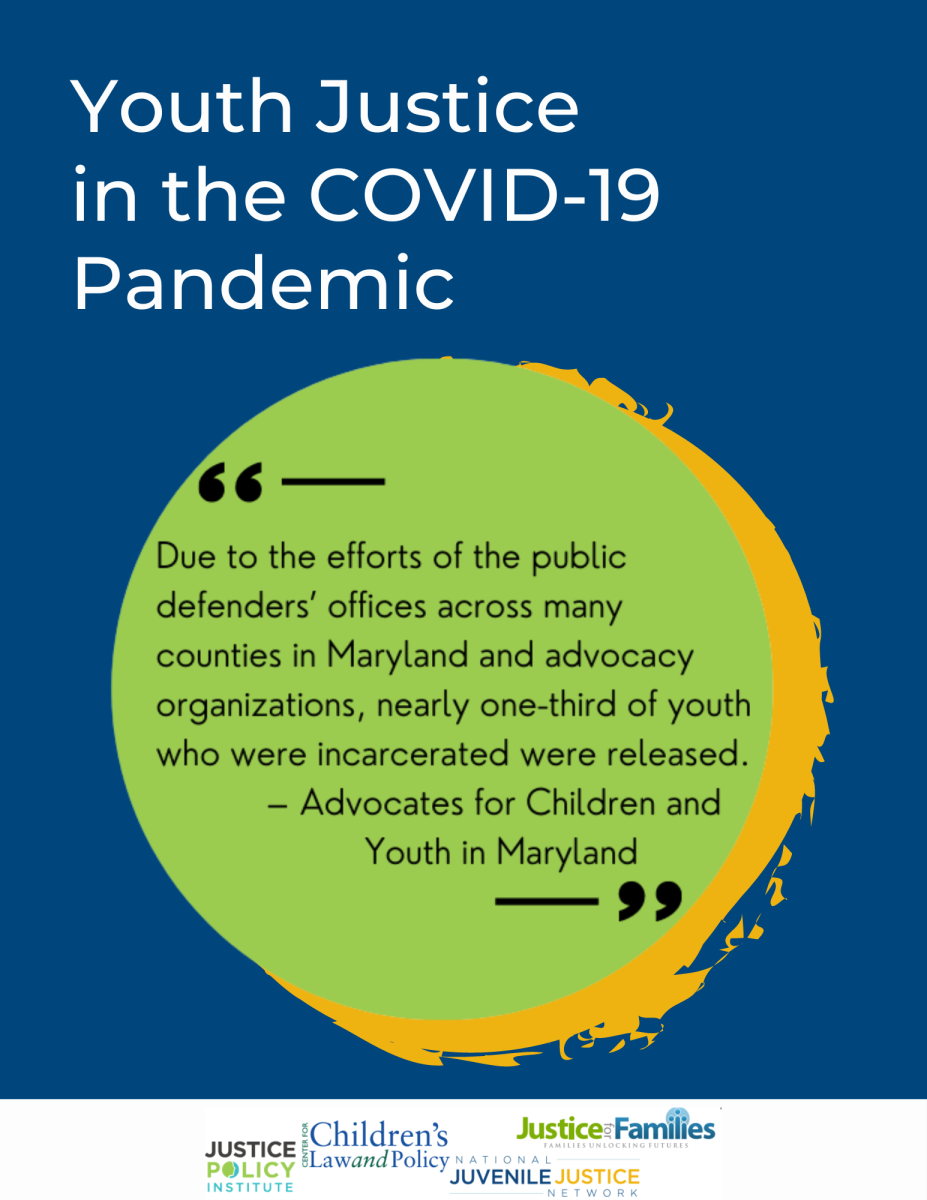
Youth Justice in the COVID-19 Pandemic, February 2023
In partnership with Center for Children’s Law and Policy, Justice for Families, Justice Policy Institute & National Youth Justice Network
The COVID-19 pandemic set in motion an unprecedented public health crisis impacting nearly every facet of American life, including the administration of youth justice. Because the health risk of the virus to young people incarcerated in corrections facilities – and the staff who worked with them – was extremely high, it forced states and localities to quickly reduce the number of young people held in congregate care facilities and implement strategies to prevent and contain the spread of the virus. Jurisdictions across the country proved that significant reductions in youth incarceration are possible. They showed that we can support and hold many more justice-involved young people accountable at home, in their own communities.
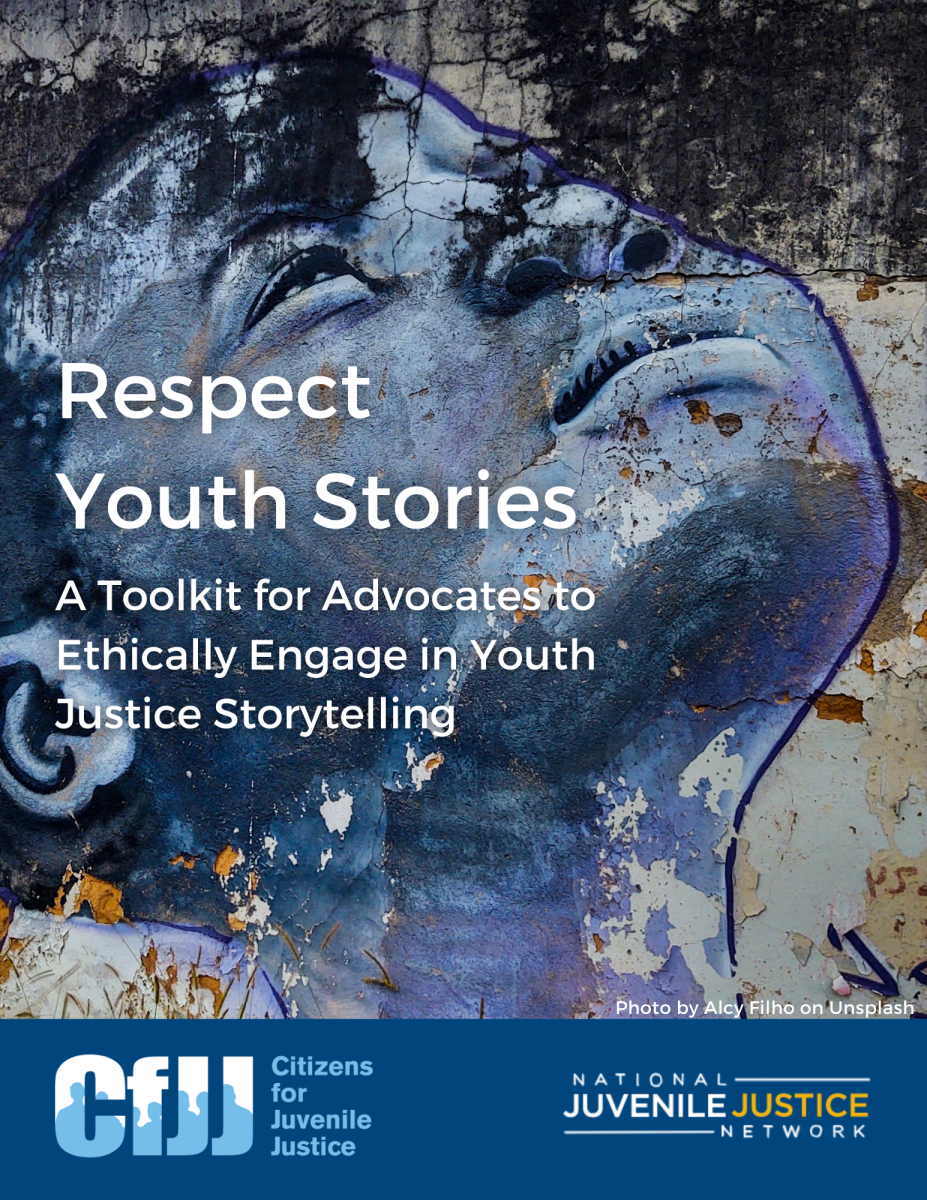
Respect Youth Stories: A Toolkit for Advocates to Ethically Engage in Youth Justice Storytelling, December 2021, Citizens for Juvenile Justice & National Youth Justice Network
Stories show us the faces behind statistics and help us understand how systems operate and impact young people’s lives. Young people giving first-hand accounts of their experiences often prove to be the most powerful lever for change. It is critically important to establish an ethical approach to advocacy storytelling so that young people are not exploited or re-harmed in the process of sharing their experiences.
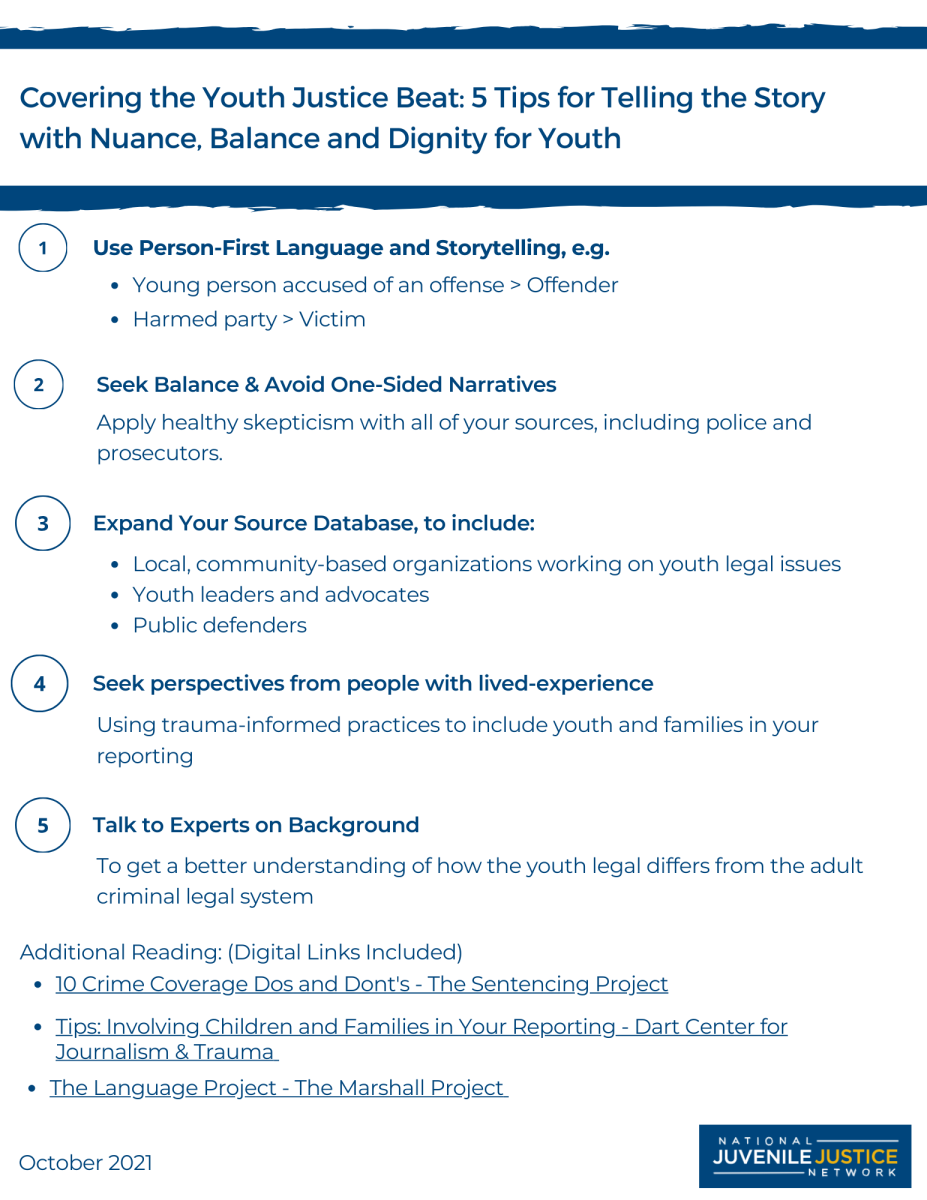
Covering the Youth Justice Beat: 5 Tips for Telling the Story with Nuance, Balance and Dignity for Youth, October 2021
This tip sheet offers five ways journalists can strengthen their coverage of youth in the legal system in order to create better context and avoid stereotyping and false narratives.

Police-Free Schools, July 2021
In Police-Free Schools, we profile several jurisdictions that recently removed police from their schools and detail how communities were able to wage successful campaigns and the types of resources schools have implemented in place of law enforcement.
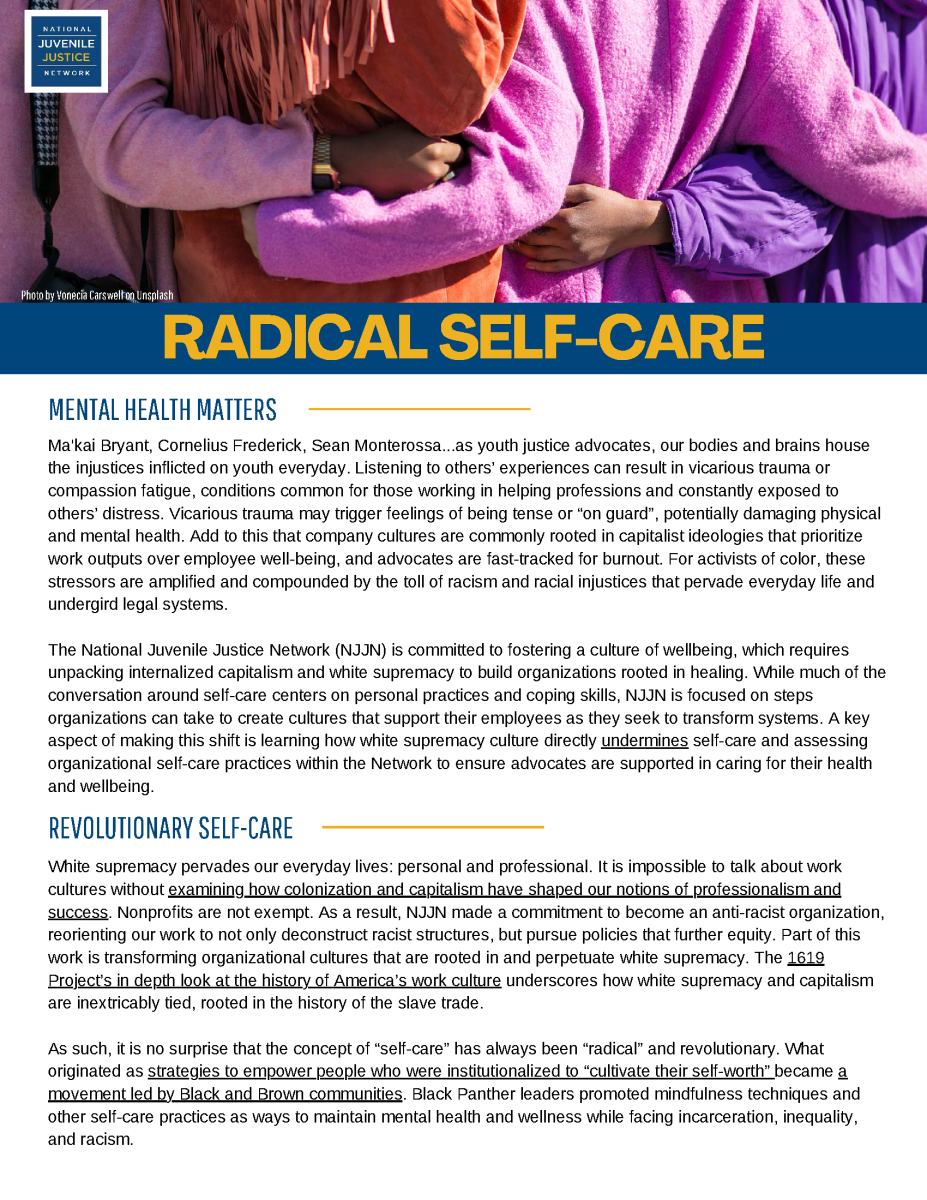
Radical Self-Care Primer, May 2021
In this 2-page primer, we outline the context of understanding self-care as a radical act, with an emphasis on transforming work culture to support the self-care of advocates, particularly advocates of color.
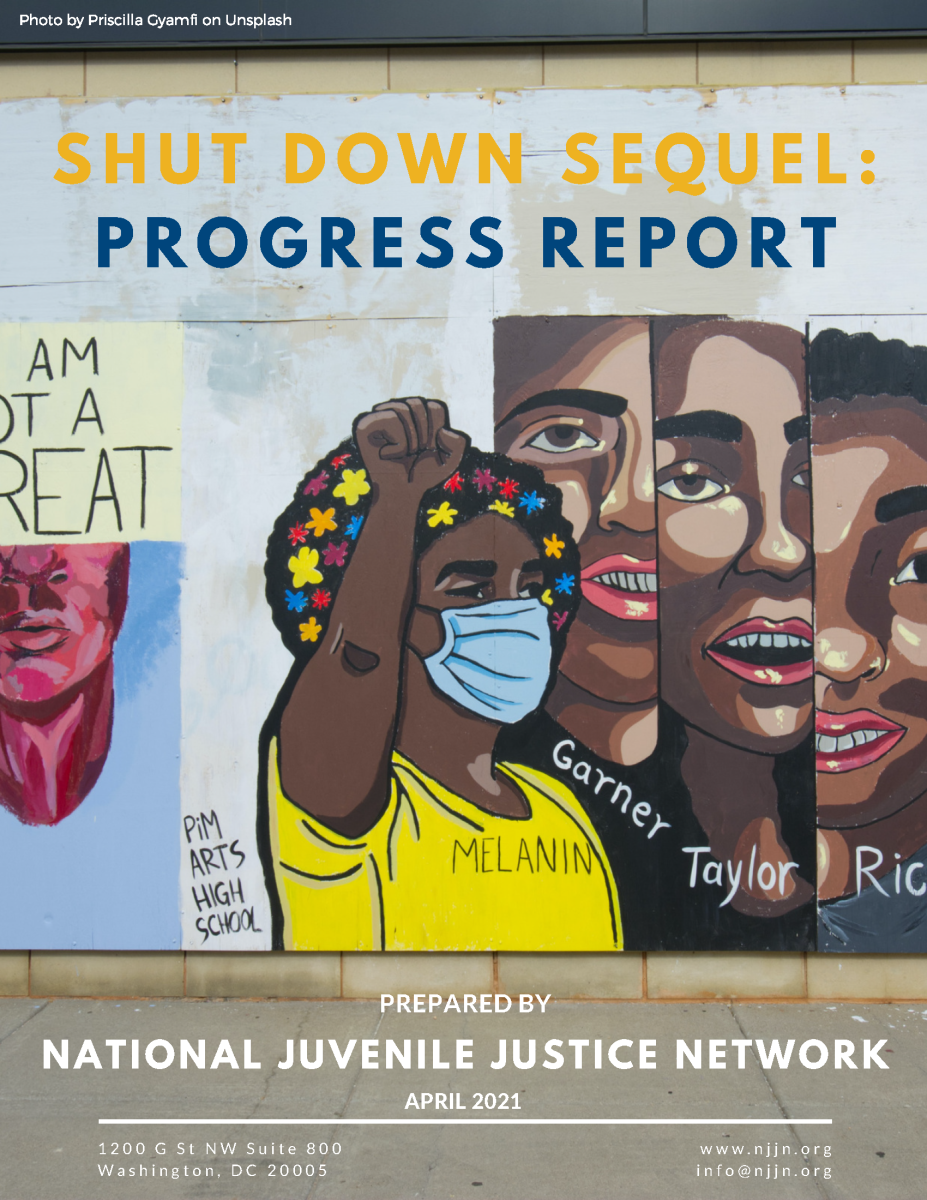
Shut Down Sequel: Progress Report, April 2021
On May 1, 2020, Cornelius Frederick tragically passed away due to injuries after being restrained for 12 minutes by staff at Lakeside, a youth behavioral health facility, in response to allegedly throwing a sandwich. His senseless death shed light on a pattern and practice of harmful restraint and abuse at for-profit facilities including, Lakeside run by Sequel Youth and Family Services. On the 1-year mark of Cornelius’ tragic death, we released a progress report on efforts made to shut down Sequel facilities and advocate for systemic reforms. This report repeats our consistent call for states to end the use of for-profit facilities for youth, ban the use of restraint, and bring youth home, prioritizing community-based care over harmful congregate care settings.
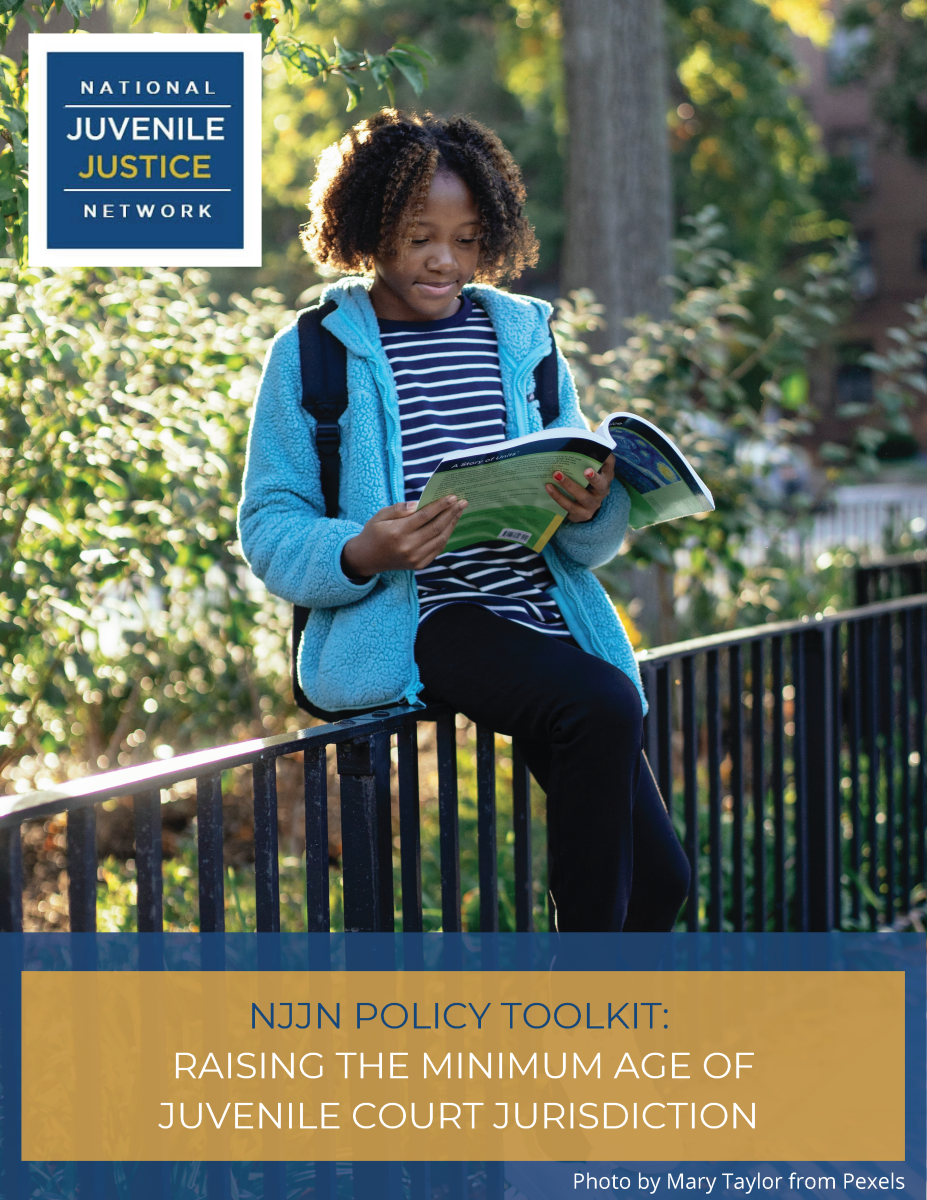
Toolkit: Raising the Minimum Age for Trying Children in Juvenile Court (February 2021)
Included in this toolkit you will find resources to help advocates establish or raise
their state’s minimum age for youth court jurisdiction, including our 2020 policy platform,
talking points, sample fact sheets from NYJN members, and links to additional resources.
The Promise of Racial Impact Statements, October 2020
In this primer, we offer a first step to unpacking the efficacy of racial impact statements for dismantling racial disparities and their usefulness as a tool for youth justice policy.

Defund Police and Invest in Youth, June 2020
In the wake of incidents of police brutality and racial justice uprisings of 2020, NYJN released a brief elevating the youth justice policy areas that reflect NYJN’s solidarity with the movement for police divestment and community re-investment.
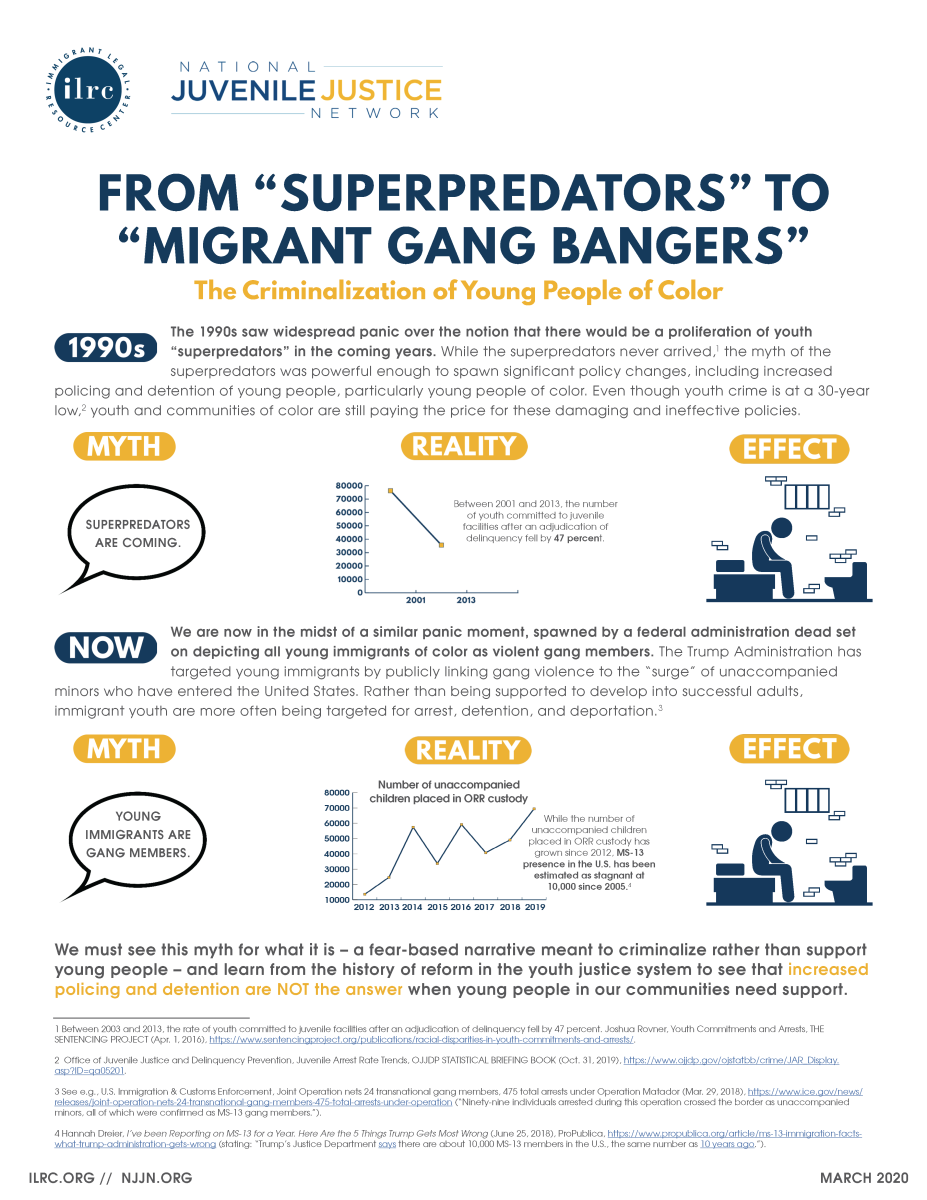
Infographic: The Criminalization of Young People of Color, March 2020
This one-page infographic separates myths from the reality and highlights the damaging effects of increased policing and detention on young people of color.

Fact Sheet: Using Victims of Crime Act Dollars for Restorative Justice (June 2019)
This fact sheet helps advocates learn how to use funds from the Victims of Crime Act (VOCA) to support restorative justice programs.

Fact Sheet: Using Victims of Crime Act Dollars for Restorative Justice (June 2019)
This fact sheet helps advocates learn how to use funds from the Victims of Crime Act (VOCA) to support restorative justice programs.