A Time Was Had: Recapping Our 2025 Forum

At the end of October we held our 2025 Annual Forum, Rising in the Moment: From Communication to Implementation. What a time we had! We cultivated community, broke bread, shared our struggles, and planned for the road ahead together. A huge thank you to everyone who came together to make the convening a success!

On the day before the Forum we held a reunion for our Youth Justice Leadership Institute Alumni. We grounded ourselves in healing justice practices and shared fellowship, with the highlight of the day being a Junkyard Jam led by Dr. Ram Bhagat of Drums No Guns. This culturally rooted drum circle blended drumming, traditional rhythms, and circle to enhance mind-body-heart connection.

We started out the first day of Forum with a grounding and land acknowledgement, then moved into our opening plenary from Sincere Allah of Sankofa Consulting, LLC. Sincere shared his story of how a lack of supportive environments, traumatic upbringing, and systemic failures led to him being swept up into the prison system as a young person. Sincere’s determination to not let the system dictate his legacy and his persistence to fight  all those harmed by the carceral system set an inspirational tone for the rest of Forum.

After our plenary we moved into a power-mapping workshop led by Amanda Wallace of Operation Stop CPS and our Executive Director, Fallon J. Speaker. We broke out into groups by region and mapped the landscape of the youth justice movement. This powermapping exercise was followed by a workshop on tools and frameworks for campaign implementation led by Civil Rights Attorney Erin Cloud. During this workshop, Erin taught the importance of understanding the different seasons of campaign development and guided participants through development of an example campaign as a group.

We then wrapped up our first day with a panel discussion with advocates from Virginia and Washington, DC about campaigns and developments in the Youth Justice Movement. Panelists included Lateefah Taylor-Parker and Frank Valdez of the Virginia Youth Justice Coalition, Sophia Genovese of Georgetown Law, Tracey Velazquez of the Council for Court Excellence, and Melissa Goemann of Next Generation Justice Consulting (formerly of NYJN). During this panel we discussed federal policies that are triggering reverse-course narrative change around youth advocacy and highlighted the importance of investing in coalition building as a method of resistance and reform.

Our second day started out with a workshop and reading from Free Minds Book Club, facilitated by their staff and formerly incarcerated Poet Ambassadors. Their Poet Ambassadors shared some of their work with us, and then led us through a guided poetry writing session. At the end of the workshop each participant received an anthology of poetry by Free Minds members.

Following the workshop our Executive Director, Fallon J. Speaker, and Amanda Wallace of Operation Stop CPS facilitated part 2 of our power mapping session and led a visioning session where we strategized on how to create a more unified youth justice movement and advance our goals even in the midst of heavy political repression.

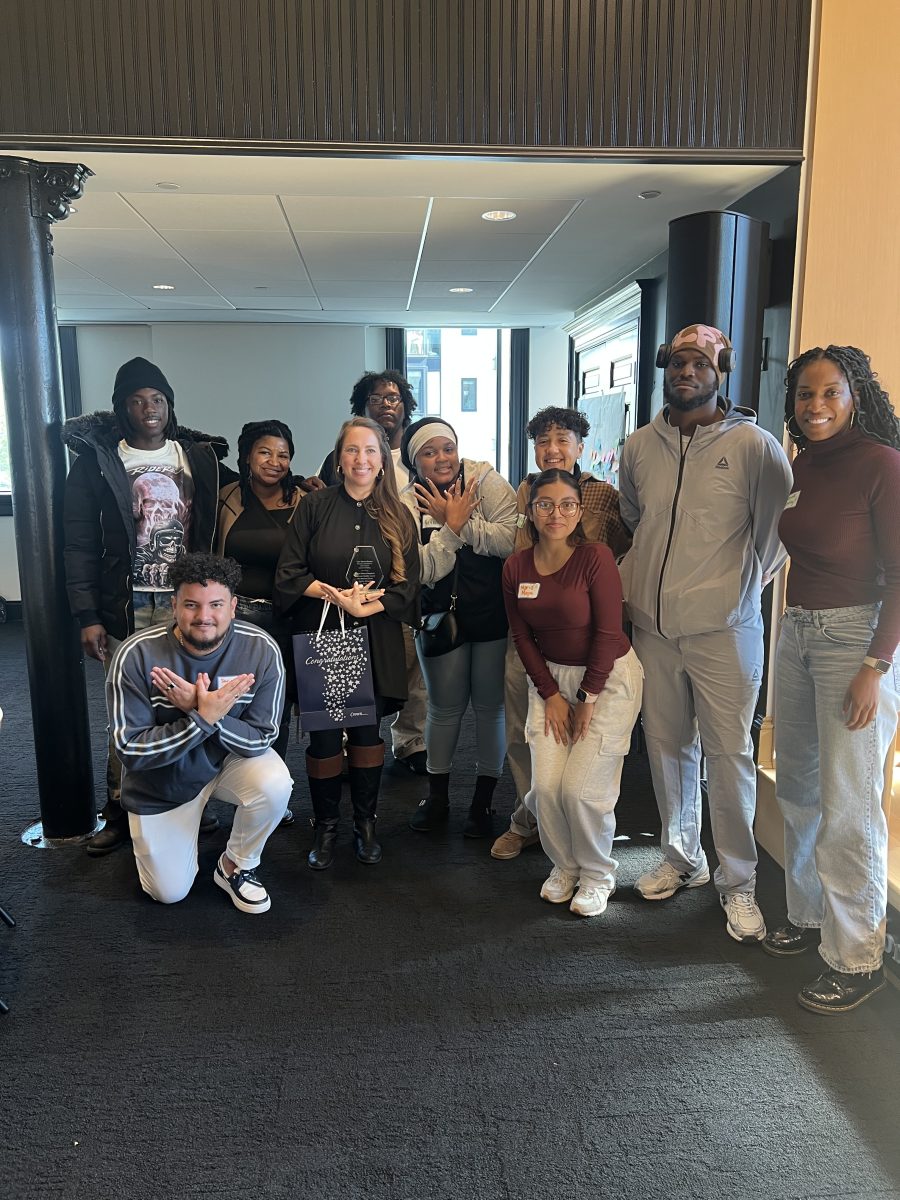
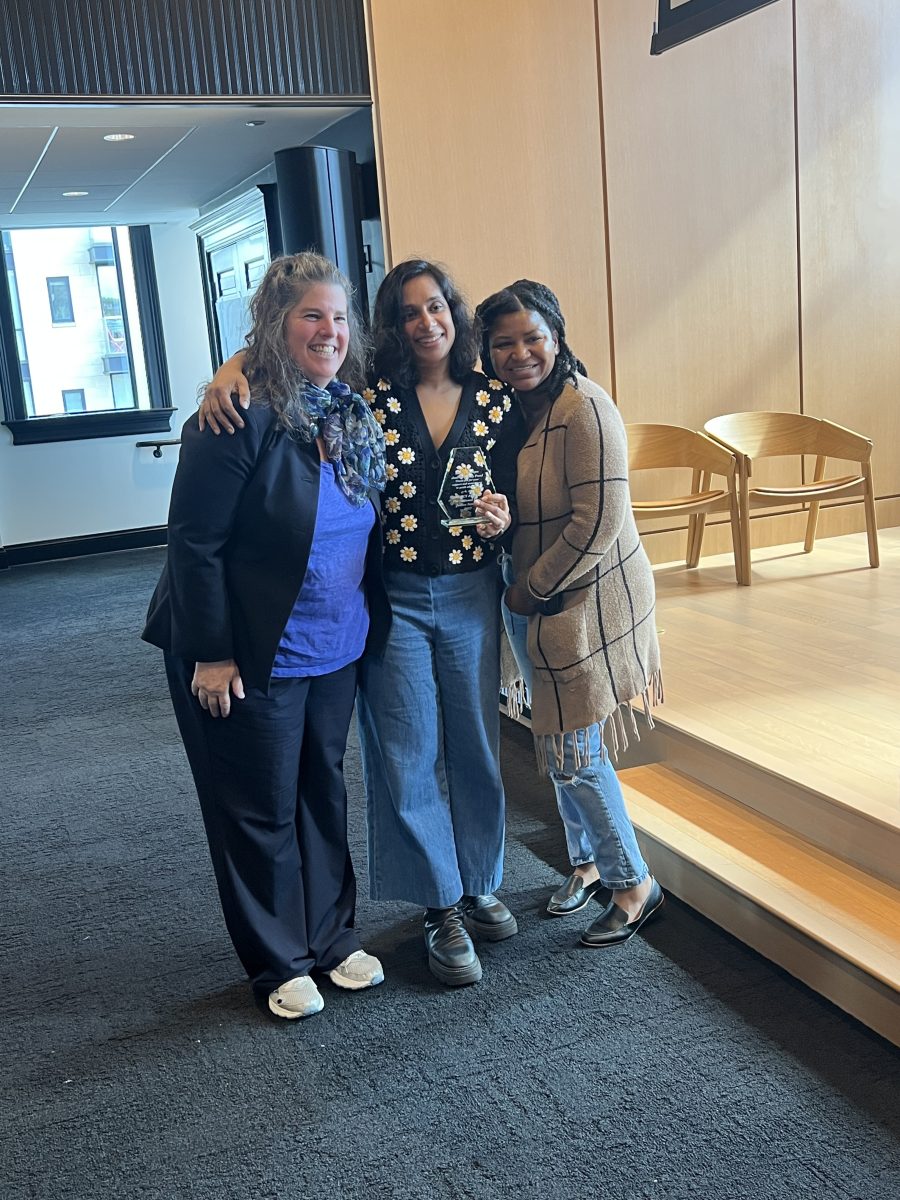
Over our last lunch together we presented three awards to valued members of our community:

  • Lisa Maria Rhodes, founder and Executive Director of ALAS, received the 2025 Diana Onley-Campbell Movement Builder Award to recognize the resounding impact of her decades-long advocacy and leadership.
  • Melissa Coretz Goemann, formerly of NYJN and now of Next Generation Justice Consulting, received our 2025 Legacy Award in recognition of her life’s work to improve policy and create youth justice reform on behalf of criminalized youth.
  • Mishi Faruquee of the Andrus Family Fund received our 2025 Impact Award for her successful leadership of campaigns to close and repurpose youth prisons, decarcerate juvenile detention centers and correctional facilities, and reinvest resources to support young people in their communities that has paved the way for the existence, sustainability and legacy of organizations such as NYJN.

Congratulations to each of the recipients and thank you for your advocacy on behalf of youth and their communities.
Throughout the Forum participants were invited to visit our healing space, where they could receive aromatherapy, quiet rest, free talk, breath therapy, spiritual reading, reiki practice, herbal rejuvenation, foot baths and sound baths. This was all thanks to our healers-in-residence Tracey and Tamara Robertson from Divined & Twined. Healing justice is a part of everything that we do, so it felt important to offer this space to participants. Healing ourselves and each other is crucial to sustaining ourselves as we move this work forward.

Our 2025 Forum was made possible by our sponsors: Andrus Family Fund, The Public Welfare Foundation, The Just Trust, The Annie E. Casey Foundation, and The Tow Foundation. Thank you to our facilitators, our healers, our speakers, our sponsors, and of course to everyone who was able to join us. We look forward to building on the momentum of this year’s forum over the coming year.
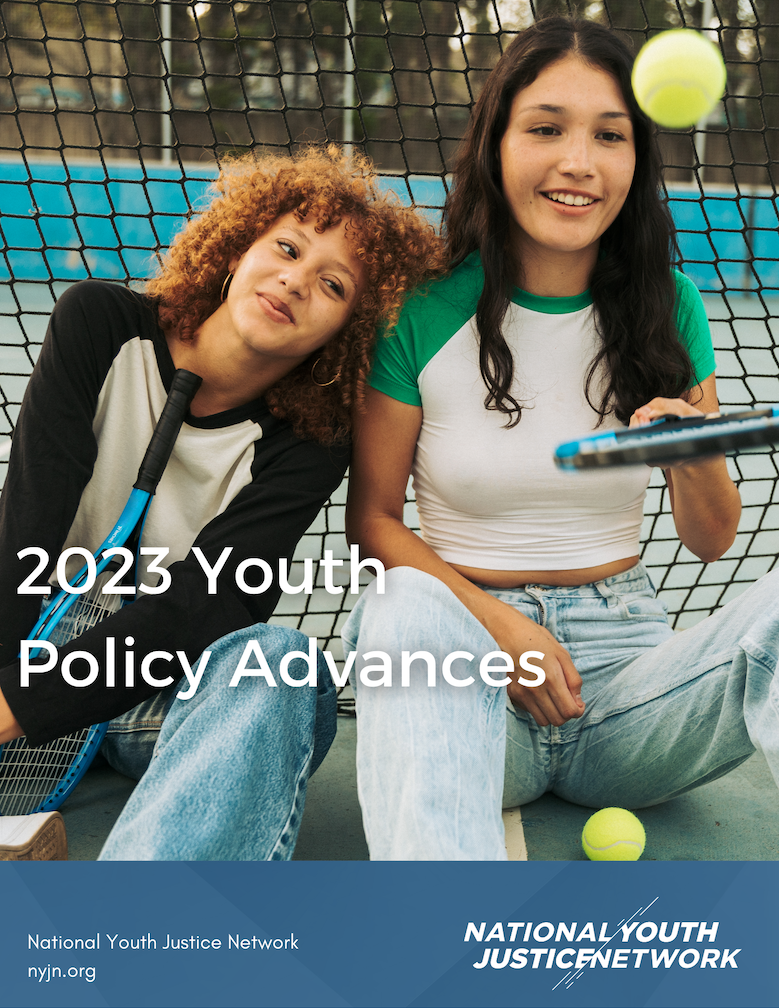
Today, NYJN releases our 2023 Youth Policy Advances, our annual compendium of youth justice policy wins from across the country. With today’s release, we celebrate the critical wins to keep more youth out of carceral settings and push our imagination forward to what true youth justice looks like – a world where community safety equals investing in the holistic resources needed for the well-being of youth and families.

In 2023, 30 states advanced 99 policy wins that will create better outcomes for youth across the country. The year showed us exactly what’s possible when we believe in a shared vision and commit to the well-being of young people.

For instance, last year:

  • Eight states pass legislation limiting or ending the imposition of juvenile court fines and fees: Arizona, Illinois, Indiana, Maine, Michigan, Montana, Texas, and Washington. In addition, Hawaii passed a resolution requiring data collection on fines, fees, and restitution assessed against minors for the last five years.
  • Seven states passed legislation expanding the ability of young people to expunge youth records (and some adult records) under certain circumstances: Kentucky, Idaho, Oregon, South Carolina, Texas, Utah, and Vermont.
  • Six states passed legislation addressing youth in the adult system, from limiting transfer to the adult system or adult facilities, to conditions for youth being tried as adults: Colorado, Connecticut, Illinois, Michigan, Oregon, and Texas.
  • Five states passed legislation focused on mental health, from improving mental health services to youth in school, in the community, and in the legal system, to diverting youth with mental health challenges in the legal system: Hawaii, Illinois, Kentucky, Texas, and West Virginia.
  • Four states passed legislation protecting young people from false statements made by law enforcement during an interrogation: Connecticut, Colorado, Indiana, and Nevada.
  • Four states passed legislation investing in resources for children and/or expanding community-based alternatives: Colorado, Michigan, Oregon, and South Dakota.
  • Four states passed legislation addressing the school-to-prison pipeline: California, Colorado, North Dakota, and Texas.
  • Three states passed legislation banning juvenile life without parole (JLWOP): Illinois, New Mexico, and Minnesota. This brings the number to 28 states that ban JLWOP!

Get the full scope of 2023 Youth Policy Advances. We know that our vision of justice grounded in the values of abolition, prevention, healing, restoration, opportunity and equity is possible. When we continue to fight, we continue to win.

Today, NYJN releases: Resourcing Communities: Investing in Youth for Justice Transformation.

In this new policy platform, we lay out our central recommendation for creating whole and safe communities through comprehensive youth investments.

Our movement for youth justice has faced an onslaught of challenges in recent months, including harmful messages about young people coded in racially biased narratives, attempts to undo youth justice policy advances, and continual political reliance on “tough-on-crime” responses that prove ineffective at creating the real safety our communities deserve.

The way to healthy, safe communities is to end the failed and morally bankrupt policy of mass incarceration of Black and Brown youth and ensure all children have an abundance of resources to flourish. That’s why Resourcing Communities’ asserts:

States and localities must invest in youth by giving communities the resources they need for young people to flourish; partnering with and empowering young people to reimagine holistic models of care that no longer rely on punitive, carceral systems; and creating the infrastructure to support the reimagined models of care.

Resourcing Communities plots a pathway towards this vision, grounded in the voices and wisdom of young people who have experienced systems harm. We offer concrete examples of state and local jurisdictions putting reimagined youth justice models into practice, and a practical guide for advocates to work towards reimagined youth justice models of care in their states.

The Coalition for Juvenile Justice (CJJ) and NYJN are excited to announce that applications are now open for Youth Justice Action Month Mini-Grants!

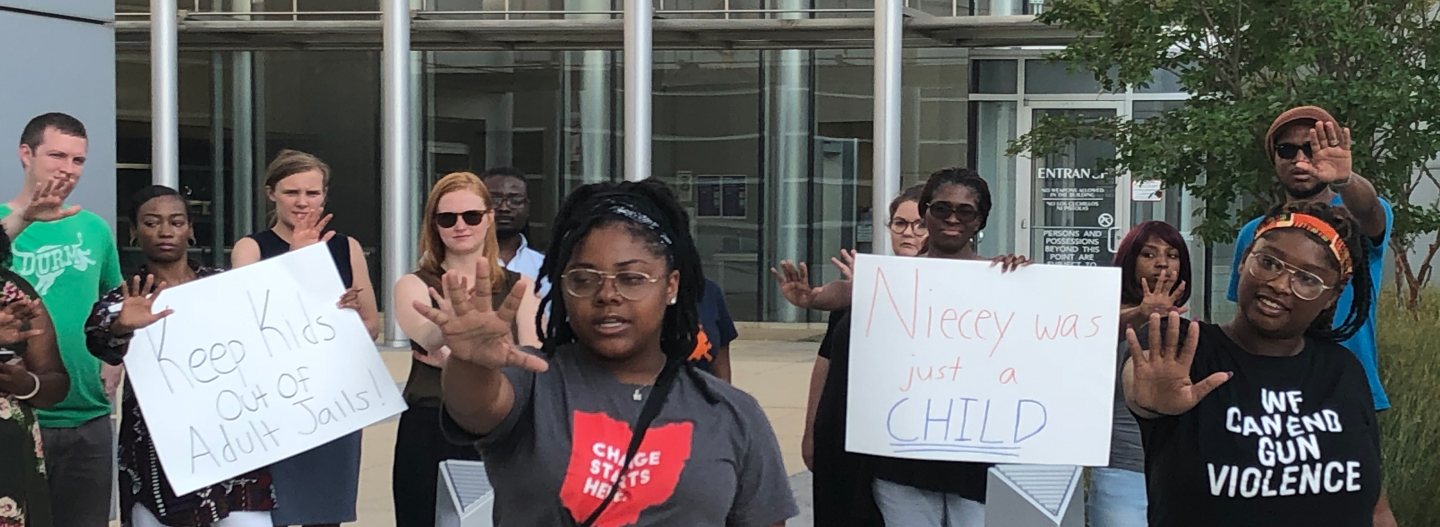
Youth Justice Action Month (YJAM) is an annual campaign held each October where advocates come together to organize digital and in-person events and activities to raise awareness and inspire action on behalf of young people impacted by the youth legal system.

This year’s YJAM theme – YOUth Are Worth It! – amplifies investing in resources youth and communities need to create true safety, not carceral systems. YJAM is also an opportunity to uplift the 50th anniversary of the federal Juvenile Justice and Delinquency Prevention Act (JJDPA), its impact, and the continued need for re-authorization.

With support from the Office of Juvenile Justice and Delinquency Prevention, CJJ and NYJN are administering up to 100 mini grants ranging from $1,000-$5,000 to support YJAM campaigns and events.

Applications must be submitted online by 11:59pm EST on May 31, 2024. Applicants will be notified of a funding decision by mid-July and projects can be held from August 1, 2024 through November, 30, 2024.

Please visit these resources for more information:
Youth Justice Action Month website
Funding Announcement
FAQs

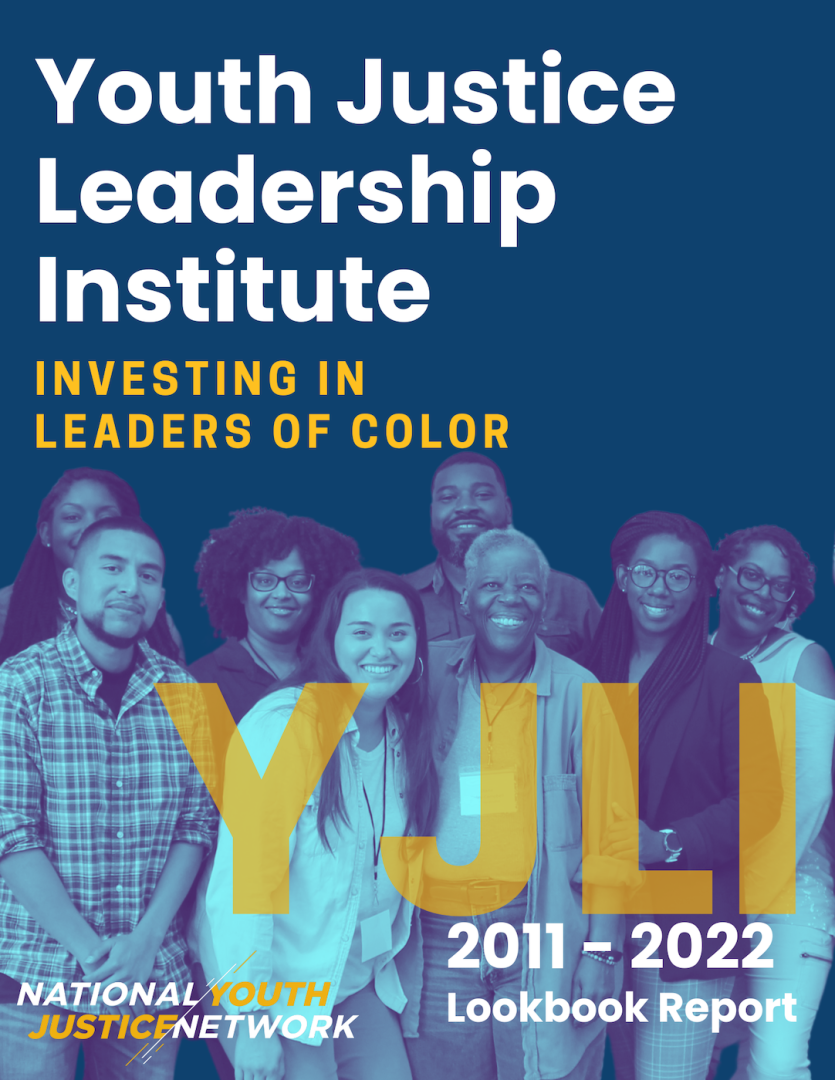
Cover Image: Photo of YJLI Alumni with report headline and NYJN Logo

The National Youth Justice Network celebrates established over a decade of transformative leadership development with our Youth Justice Leadership Institute (YJLI) lookbook! YJLI was established in 2011 to deepen and strengthen the leadership of Black, Indigenous and other People of Color (BIPOC) advocates working to create true youth justice. YJLI’s exists to clear a broad path for people of color to lead the youth justice movement toward abolition and the dismantling the oppressive systems harming our communities. Since 2011, 105 leaders representing 36 states have matriculated through YJLI and are occupying leadership positions across the country.

Why does this matter?

Our movement is not just about changing policies – it’s about uprooting systems of oppression that suppress the leadership and voices of communities of color. An essential element of winning transformative change is investing in transformative leaders who represent impacted communities. With YJLI, we invest in a long-term social justice leadership pipeline while also modeling the power shift needed to reach the transformation we seek