Statement: Prosecuting 10-year old child as an adult is inhumane
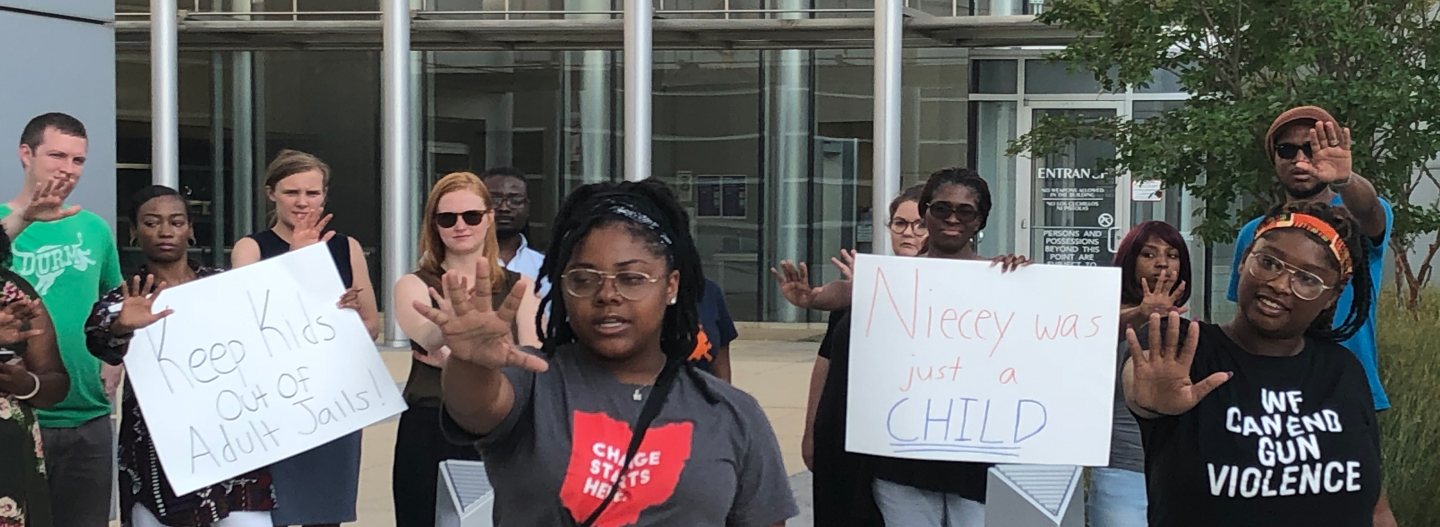
On today, June 18, 2024, NYJN joins our member Kids Forward, part of the Wisconsin Raise the Age Coalition, and other advocates opposing the adult prosecution of a 10-year old child during a morning press conference held in Milwaukee, WI. In a statement supplied to members of the media, NYJN reiterated what science and common sense have declared time and time again: Treating children as adults is not only inhumane but counterproductive, as it perpetuates cycles of trauma and fails to address the root cause of youth behavior.
We stand in solidarity with NYJN member Kids Forward and community advocates in calling for humane and age-appropriate responses to youth behavior that center prevention and healing, not those that create conditions for continued cycles of harm.
See full statement below.
NYJN Statement on Prosecuting Milwaukee Child as an Adult
The National Youth Justice Network (NYJN) is deeply troubled by the Milwaukee County District Attorney’s attempt to prosecute a child who was 10 years old at the time of an alleged offense as an adult. This appalling action not only represents a gross miscarriage of justice but it draws attention to the need for significant systemic reform within Wisconsin’s legal system. Treating children as adults is not only inhumane but counterproductive, as it perpetuates cycles of trauma and fails to address the root cause of youth behavior. We urge the Milwaukee County District Attorney to cease criminal prosecution of this child in favor of developmentally-appropriate treatment, as well as to re-evaluate justice policies to ensure that they protect children and actually achieve community safety.
Science and personal experience tell us that children are different from adults. A century ago, the juvenile system was established to protect and rehabilitate children who committed an offense and help them become productive citizens. It recognized their unique needs. Moreover, children are capable of learning and changing. Transfer to adult court is more about punishment than rehabilitation.
Wisconsin is now an outlier in the country in terms of prosecuting ten year old children as adults; it is one of only a handful of states that allow children so young to be transferred into the adult system. The negative impacts of treating children as adults are substantial and often life-long, affecting them, their families, and communities. Children incarcerated in adult facilities are extremely vulnerable to physical and sexual assault and have much higher rates of suicide than youth in juvenile facilities. Having a criminal record may also significantly diminish future chances for employment, education, and decent housing. Studies show that transferring youth to adult court for trial and sentencing has produced the unintended effect of increasing recidivism. A program that is aimed at treating, educating, and rehabilitating youth best protects the public.
Wisconsin is also an outlier internationally in terms of prosecuting 10-year-olds at all. The United Nations Convention on the Rights of the Child (CRC) urged nations to set their minimum age of criminal responsibility to at least 14 years old, the most common minimum age of criminal responsibility internationally. Wisconsin has set its minimum age of juvenile court jurisdiction at 10 years old – far below the international standard. It demonstrates how deeply inappropriate it would be to try this child as an adult when he just barely meets Wisconsin’s standard for juvenile court prosecution.
It is unlikely that this child has the capacity or competency necessary to stand trial at all, let alone a trial in an adult court. A ten year old child does not have the mental capacity necessary to fully grasp what it means to break the law or to fully understand the legal and moral implications of their actions. Given his young age, and the fact that he suffered a concussion the year before that may have altered his behavior, he is also very likely incompetent to stand trial. In order to be found competent, a defendant must be able to consult with their lawyer “with a reasonable degree of rational understanding” as well as have “a rational as well as factual understanding of the proceedings against him.” Few ten-year-olds meet this standard and it is unlikely that this child, in particular, could have been found competent if he was appropriately assessed.
The best way to address harm that a young child may cause is through treatment of any underlying conditions, not through criminalizing them, and especially not through handling their prosecution in a court meant for adults. Any response to a child’s behavior must be age appropriate to ensure humane and beneficial treatment for the child which, in turn, places them on a positive trajectory that then best safeguards the community.
This case demonstrates the fact that systems change is urgently needed in Wisconsin so that neither this child, nor any other child, are harmed. Change is needed to both ends of the system, so that very young children are not inappropriately prosecuted and 17-year-olds are not routinely prosecuted as if they were adults. The following changes should be made to bring Wisconsin up to national and international standards of humane treatment for children:
- Raise the minimum age of juvenile court jurisdiction above 10 years old.
- Raise the upper age of juvenile court jurisdiction to 18 years old.
- End the ability to transfer children as young as 10 years old into the adult system and end automatic transfers of any children into the adult system; all children should get a judicial review prior to transfer.
NYJN calls on the Milwaukee County District Attorney to end the unjust adult prosecution of this child and provide him with the mental health treatment and other supports that he and his family may need to ensure his healthy development. Every life is precious and no child should be thrown away – but that is exactly what prosecuting a 10-year-old in the adult system and potentially confining him for decades would do. We know you can do better.
###
About the National Youth Justice Network
The National Youth Justice Network (NYJN) builds the movement for anti-racist, healing-centered youth justice. We unite a diverse network of advocates and organizers to shift youth justice away from policing and prisons toward community-based, trauma-informed and healing-centered responses to youth needs. Our work centers the needs of the most marginalized, and we seek a reimagined future where Black, Brown, Indigenous, LGBTQIA+ youth, and youth with disabilities have the freedom, resources and opportunities necessary to thrive.
Contact: Melissa Goemann, Senior Policy Counsel, National Youth Justice Network, goemann@nyjn.org